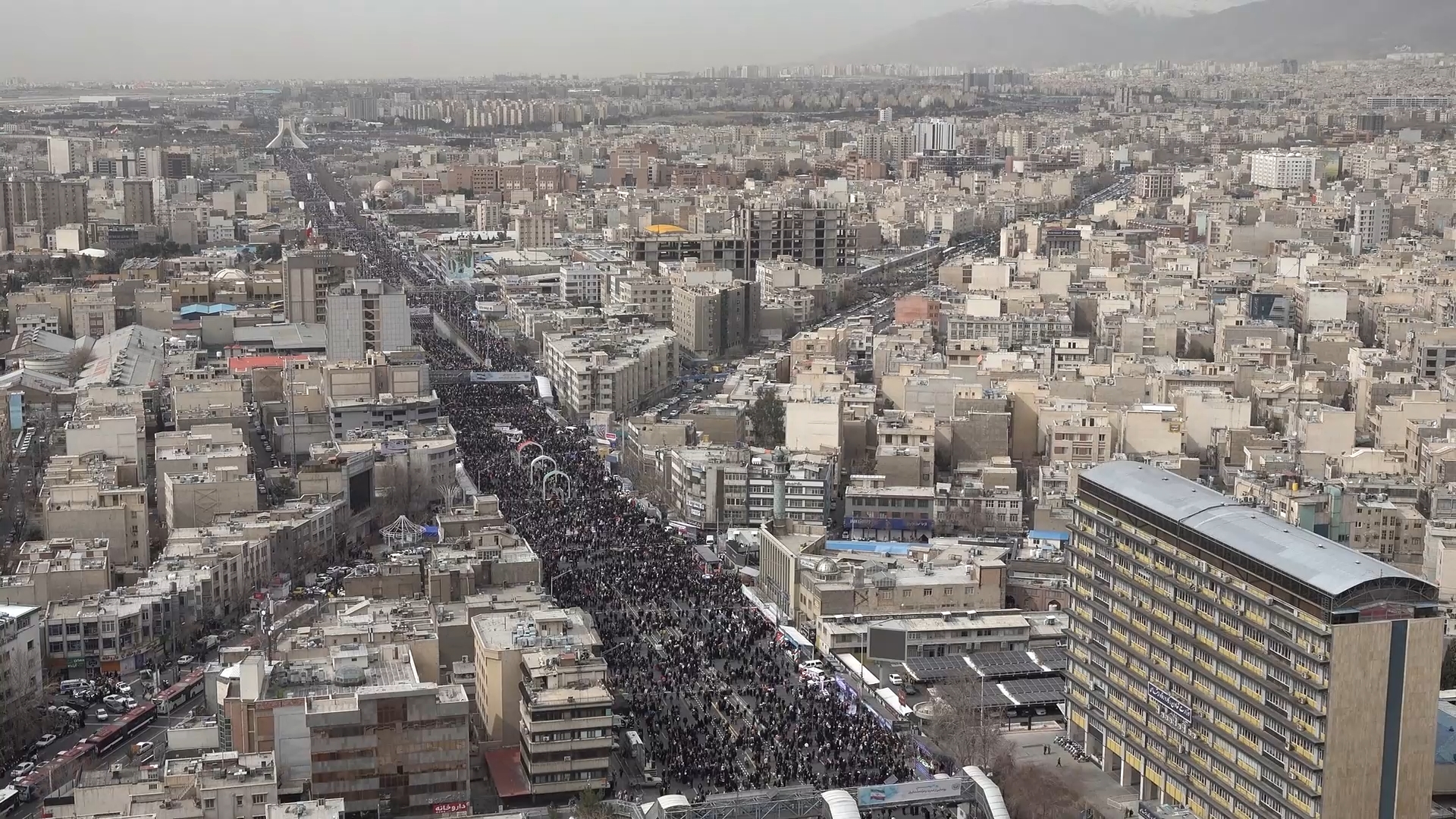
Bahman 22 (February 11) is the day Iran unveils its power and dignity every year, said Iran’s Leader of the Islamic Revolution, Ayatollah Seyyed Ali Khamenei, on Monday, two days before the annual rallies were set to take place. “Disappoint the enemy,” he added in a televised message. Observers could argue that this is precisely what the Iranian people went on to do.
In at least 1,400 cities across the country, people poured into the streets in large—and in some cases unprecedented—numbers. Every city recorded a turnout increase of between 30 and 150 percent compared to previous years, with at least 15 provinces seeing participation double. New records were set in provinces such as Kermanshah and West Azarbaijan. Men and women, young and old, from different walks of life, all carried the same message: we stand behind our country.
In mid-January, Iran’s enemies—primarily the United States—were openly speaking about an imminent change inside the country. According to remarks by U.S. Treasury Secretary Scott Bessent, Washington engineered a dollar shortage that triggered an unprecedented fall in the Iranian rial, fueling inflation and leading to protests by merchants and shopkeepers. For several days, the demonstrations remained peaceful. But once it became clear that they would not escalate on their own, Israel and the U.S. began activating a network of agents they had built over several years.
Between January 8 and January 14, trained, armed, and masked individuals took to the streets, torching public and private property and killing anyone who crossed their path—security forces, passersby, civilians, and even the protesters. As armed rioters were arrested and the unrest moved toward complete collapse, U.S. President Donald Trump began preparing for a second wave of aggression against Iran. He ultimately scrapped those plans after realizing the costs would be far too high, and has since opted to return to the negotiating table with the very country he bombed in June 2025.
Imam Khomeini is a figure many younger Iranians do not feel as personally close to as they do to Ayatollah Khamenei, who has led the country for most of the Islamic Republic’s existence. Yet the ideas of the Islamic Revolution’s founder remain deeply ingrained in their thinking, even if many do not realize that those ideas were first articulated by Imam Khomeini 47 years ago.
Over the course of 12 days, Iranian missile and drone attacks left large swathes of Israeli cities in ruins and inflicted damage on the largest U.S. base in West Asia, before the two regimes asked Iran for a ceasefire. Iranian military officials have since said that missile and drone stockpiles have only grown, and that the country is prepared to carry out even more destructive, regret-inducing strikes in any future conflict. Iranian diplomats, for their part, say the United States can avoid such a war altogether if it chooses diplomacy.
Israelis may tell Trump not to take these warnings seriously. The millions of Iranians who filled the streets across the country on Wednesday, however, did not come out of fear—but out of confidence that Iran both means what it says and has the means to defend itself.